In my therapy room, I often meet men who have never been given permission to feel.
They have been taught to provide, to endure, to fix, to succeed but not to pause. Not to grieve. Not to say, “I’m overwhelmed.”
As a psychologist in india, I work with individuals, couples, teens, and families across cities and even internationally. And one pattern has become increasingly clear to me: many emotional struggles in men are not rooted in weakness they are rooted in outdated definitions of masculinity.
When we rethink masculinity, we don’t weaken men.
We strengthen families. We improve relationships. We reduce anxiety and depression. We build healthier societies.
Let me share what I see, both clinically and culturally.
The Emotional Cost of “Be Strong”
Many boys grow up hearing subtle instructions:
- Don’t cry.
- Be tough.
- Handle it yourself.
- Don’t complain.
By the time they become men, emotional suppression feels normal.
As an individual therapist, I often work with men who struggle to identify what they are feeling. They can describe stress at work in detail, but when I ask, “What did that make you feel?” there is silence.
This isn’t emotional incapacity. It’s emotional conditioning.
Research in psychology consistently shows that emotional suppression is linked to:
- Higher anxiety
- Increased risk of depression
- Greater relationship dissatisfaction
- Higher physiological stress markers
When feelings are buried, they don’t disappear. They surface as irritability, withdrawal, or burnout.
In some cases, untreated emotional distress can even resemble chronic post traumatic stress disorder symptoms, especially in men who have experienced trauma but were never encouraged to process it.
Strength is not the absence of emotion.
Strength is the ability to hold it.
1. Emotional Literacy Builds Mental Resilience
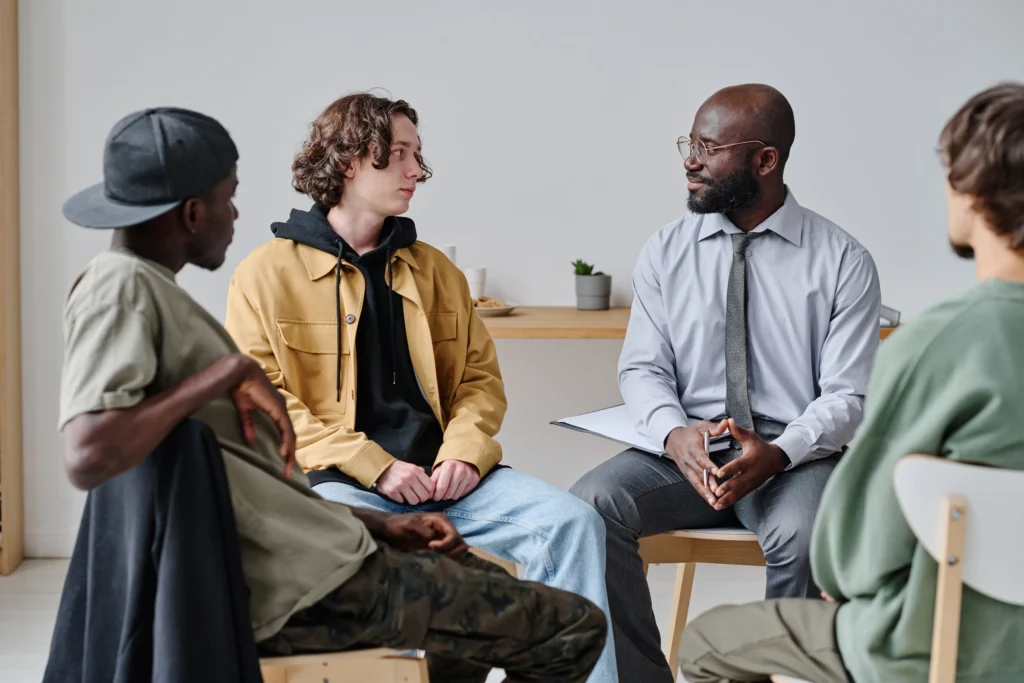
When I work with men whether in INDIVIDUAL THERAPY or alongside Certified cognitive behavioral therapists in Mumbai one of the first goals is emotional vocabulary.
Naming an emotion reduces its intensity.
Suppressing it amplifies it.
Men who allow themselves to say:
- “I feel anxious.”
- “I feel rejected.”
- “I feel uncertain.”
are often less reactive in conflict.
As a Licensed psychologist in India, I have observed that men who engage in therapy early show:
- Improved stress tolerance
- Healthier communication
- Lower anxiety levels
- Better sleep
In fact, many men who initially come seeking support for work stress later discover that unexpressed vulnerability is at the root of their exhaustion.
Healthy masculinity includes emotional awareness.
2. Redefining Masculinity Improves Relationships
In couple counselling mumbai, I frequently see the impact of rigid gender expectations.
Many women tell me, “He doesn’t open up.”
Many men tell me, “I don’t know how.”
Traditional masculinity often equates vulnerability with weakness. But intimacy requires emotional risk.
When men begin therapy whether through Premarital counseling services in Mumbai or relationship work, they often realize that emotional expression does not reduce authority; it deepens connection.
In fact, studies on relationship satisfaction show that emotional responsiveness is one of the strongest predictors of long-term stability.
Healthy masculinity is not dominance.
It is emotional responsibility.
As an Experienced marriage and family therapists in Mumbai, I see how shifting this one belief transforms family dynamics.
3. Mental Health Outcomes Improve When Stigma Reduces
Men are statistically less likely to seek therapy yet more likely to engage in high-risk coping behaviors.
In my practice as a family therapist in mumbai, I have worked with families where unaddressed male stress manifests as:
- Anger outbursts
- Withdrawal
- Substance reliance
- Emotional distance
When men begin therapy whether through structured Anxiety management programs in Mumbai or trauma-focused work with a PTSD specialist in Mumbai outcomes are often deeply transformative.
They report:
- Reduced irritability
- Improved parenting
- Greater emotional closeness with partners
- Lower anxiety
Healthy masculinity includes asking for help.
And seeking help is not a failure of strength it is an act of responsibility.
The Indian Context: Why This Conversation Matters Now
India is changing rapidly. Economic pressure, urban stress, and social shifts are redefining what it means to “be a man.”
Yet emotional education has not kept pace.
As one of many therapists in mumbai, I see young men navigating:
- Performance pressure
- Social comparison
- Career anxiety
- Relationship confusion
Many feel alone even when surrounded by support.
Through Online psychologist consultation in India, I now work with men in smaller cities who previously had no access to therapy. What I hear repeatedly is this:
“I’ve never spoken about this before.”
When masculinity is redefined to include emotional literacy, we see healthier men and healthier families.
Masculinity and Fatherhood
In FAMILY THERAPY, I often explore how fathers model emotional behavior for their children.
Children don’t just inherit genes.
They inherit emotional templates.
When boys see fathers express vulnerability safely, they learn that strength and softness can coexist.
When girls see emotionally aware fathers, their expectations of partnership shift.
Rethinking masculinity is not only about men.
It is about generational change.
When to Consider Therapy
If you notice:
- Persistent stress
- Emotional numbness
- Relationship conflict
- Irritability or anger
- Difficulty sleeping
It may be worth speaking to a professional.
Whether through structured therapy, Group therapy sessions in Mumbai, or even initial screenings like Online depression and anxiety tests in India, early intervention creates long-term benefit.
In my work across DEPRESSION THERAPY, ANXIETY, trauma recovery, and relational support, I have seen how emotional permission transforms outcomes.
Masculinity does not need to be dismantled.
It needs to be expanded.
Final Thoughts
Healthy masculinity includes:
- Emotional awareness
- Accountability
- Vulnerability
- Compassion
- Strength
Strength without empathy becomes rigidity.
Strength with empathy becomes leadership.
As a psychologist in india, my hope is not to redefine men but to support them in redefining themselves.
When men feel safely human, families feel safer too.
Practo Profile Line:
Ms. Tanu Choksi is a compassionate psychologist in Mumbai offering evidence-based therapy for individuals, couples, families, and teens in a safe, collaborative space.
For more insights on emotional wellbeing and relationships:
Instagram | LinkedIn | Facebook.
Start your journey toward healthier emotional strength today.