Introduction
People do not clearly understand autism, and, unfortunately, rumors propagate quicker than facts. Parents who showed up at the therapy with a feeling of guilt, confusion, or fear have happened to me because of the myths they heard on the internet.
Being a registered psychologist in India, I think that knowledge is empowerment. This paper addresses the true meaning of autism, misunderstandings that negatively affect families, and how knowledge and empathy are solutions to change things.
What IS The Autism Spectrum Disorder (ASD)?
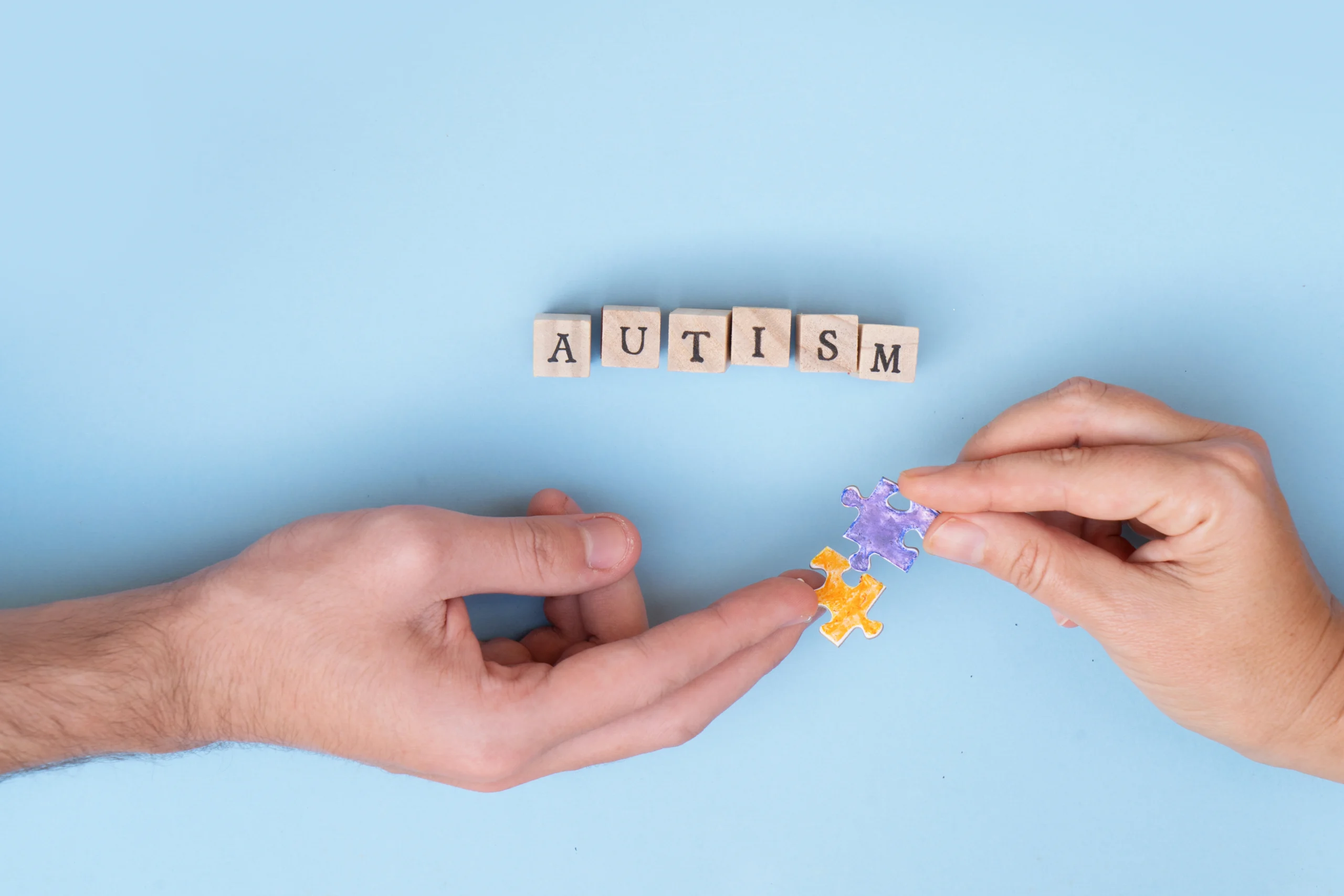
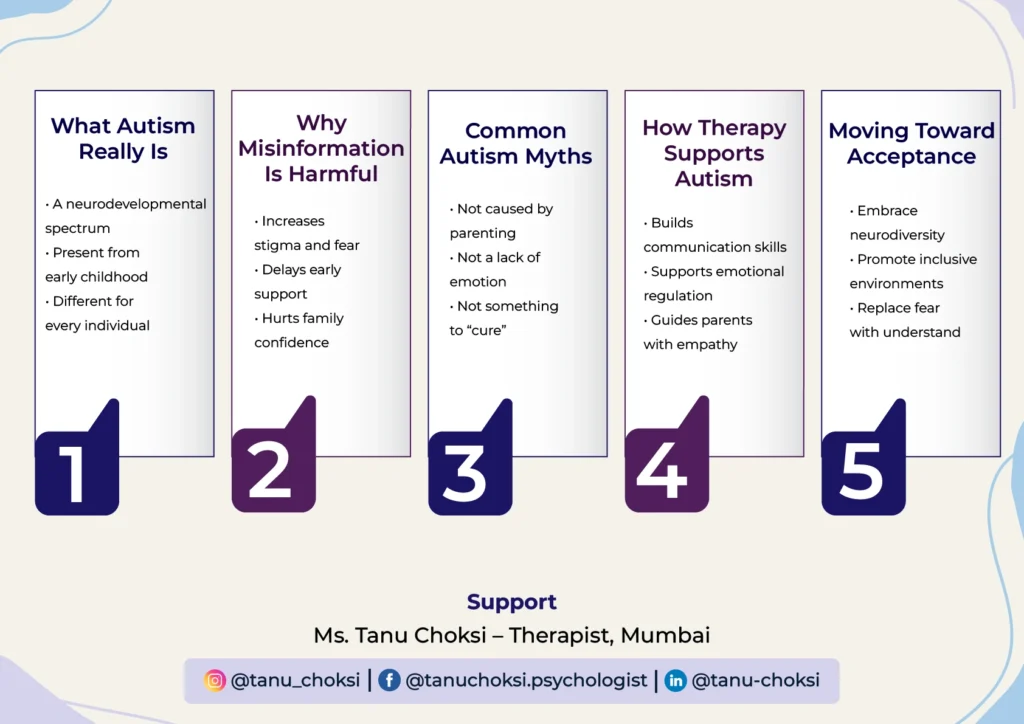
Autism Spectrum Disorder is a neurodevelopmental disorder which involves impairment of communication, societal interaction, and behavior. The reason why it is referred to as a spectrum is that all people experience it in different ways, there are no two people with autism who are alike.
Autism is not an ailment that can be cured. It is another realm of understanding and living the world.
Key facts to know:
- It normally presents itself during early childhood.
- Child counseling also aids in the development of emotional and social skills that are provided early on.
- Numerous autistic people have outstanding strengths in the form of creativity, memory, pattern recognition, and empathy.
What Is The Importance of Dispelling Misinformation?
- It Reduces Stigma
The misinformation commonly tends to make autism look like a tragedy or a defect. Proper conception substitutes judgment with pity, which is the objective of every particular therapist. - It Makes Families Be in a Response Way.
Once the parents are able to know the truth, they get out of the denial or blaming stage and move on to acceptance and active encouragement. An early awareness will result in the child having better communication and self esteem. - It Encourages Inclusion
True knowledge fosters living environments in form of schools, work places, and neighborhoods that support a variety of thinking and emotional life styles.
What Are The Common Myths About Autism
- Myth 1: Autism Caused by Bad Parenting.
The parenting style does not cause autism. It is associated with brain formation and genes. Accusing parents will result in more useless guilt to families that require support. - Myth 2: Lethargic in Emotions.
Most people with autism have a strong emotional state – it is just that they communicate in a different way. Understanding that dissimilarity permits more sympathetic association. - Myth 3: “Autism Can Be Cured.”
Autism is not an illness; it is a neurotype that an individual will experience throughout his/her life. The idea of therapy is to support, not to destruct, that is, to help people live successfully by communicating with them individually and using emotional approaches. - Myth 4: “Autism Appears the Same in All.”
The spectrum is broad. There are those who require care on a daily basis and others who live on their own. Knowing that diversity makes it impossible to make damaging stereotypes.
What Is The Way We Should Support Autism in Therapy.
My practice experience in India as a psychologist in India aims at assisting children and families to establish emotional bonds and confidence.
Here’s how that process works:
- Evaluation and Attentiveness – Being sensitive in sensory, social and emotional portrait of the individual child.
- Skills – The practice of communication, routine management skills, coping skills working on child counseling.
- Parental Guidance – Educating the caregivers on positive communication and the need to celebrate achievements and not perfection.
- Community and School Support – Making arrangements with educators to make sure they are inclusive and understanding.
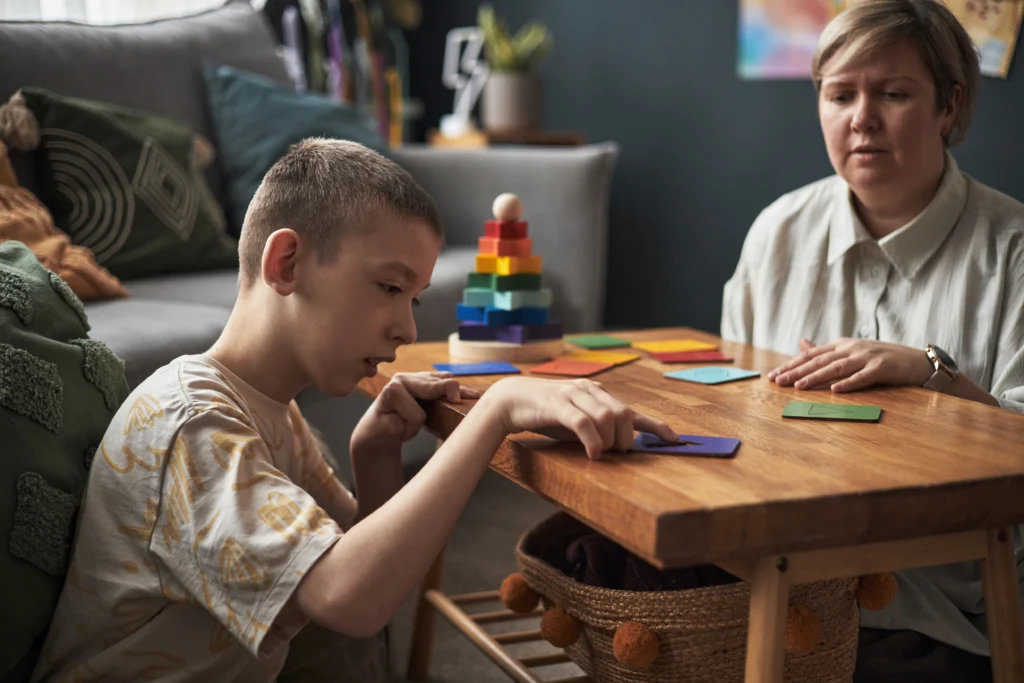
Therapy is not about how to make the child different, but a way of making him or her feel safe being the way he is.
What Are The Obstacles We Have to Come Over.
To this day, I even face difficulties based on social myths:
- Late diagnosis because of the denial or stigma.
- Excessive stress upon normalization.
- Lack of inclusive education.
We are therapists in Mumbai and other parts and seek to substitute fear with knowledge. As soon as families get to know that autism is merely a variant of human experience, they lose the power of shame.
Future Directions and Hope
Throughout the world, the dialogue on the topic of autism is becoming more in-respect and precise. The concept of neurodiversity (that brain variations are a natural and ought to be useful) is transforming mental health overall in the way we think about it.
Autistic individuals are finding it easy to express themselves due to technology, inclusive learning programs and being more represented.
I am happy to be a part of the shift to a place of therapy, which is much more focused on empowerment rather than correction.
What Is The Role of Therapy in Assisting Families.
You do not need to make your way alone in case your child has just been diagnosed or just in case you do not understand why there is developmental difference.
Possibly, as a result of child counseling and family sessions, we will manage to establish a secure space to learn, adapt, and come to terms with the world of your child. Early knowledge is no longer about naming, but rather leading by love and consciousness.
Conclusion
Misinformation restrains potential, though not autism. Being a senate therapist in Mumbai, I feel that acceptance comes first with education – and compassion will be achieved through understanding.
By substituting myths with mindfulness, we will have taken a step closer to a world where all minds, neurodiverse and otherwise, will feel appreciated.
Learn, reflect, and heal – follow Tanu Choksi on Instagram, LinkedIn, and Facebook for expert insights on therapy and self-understanding.