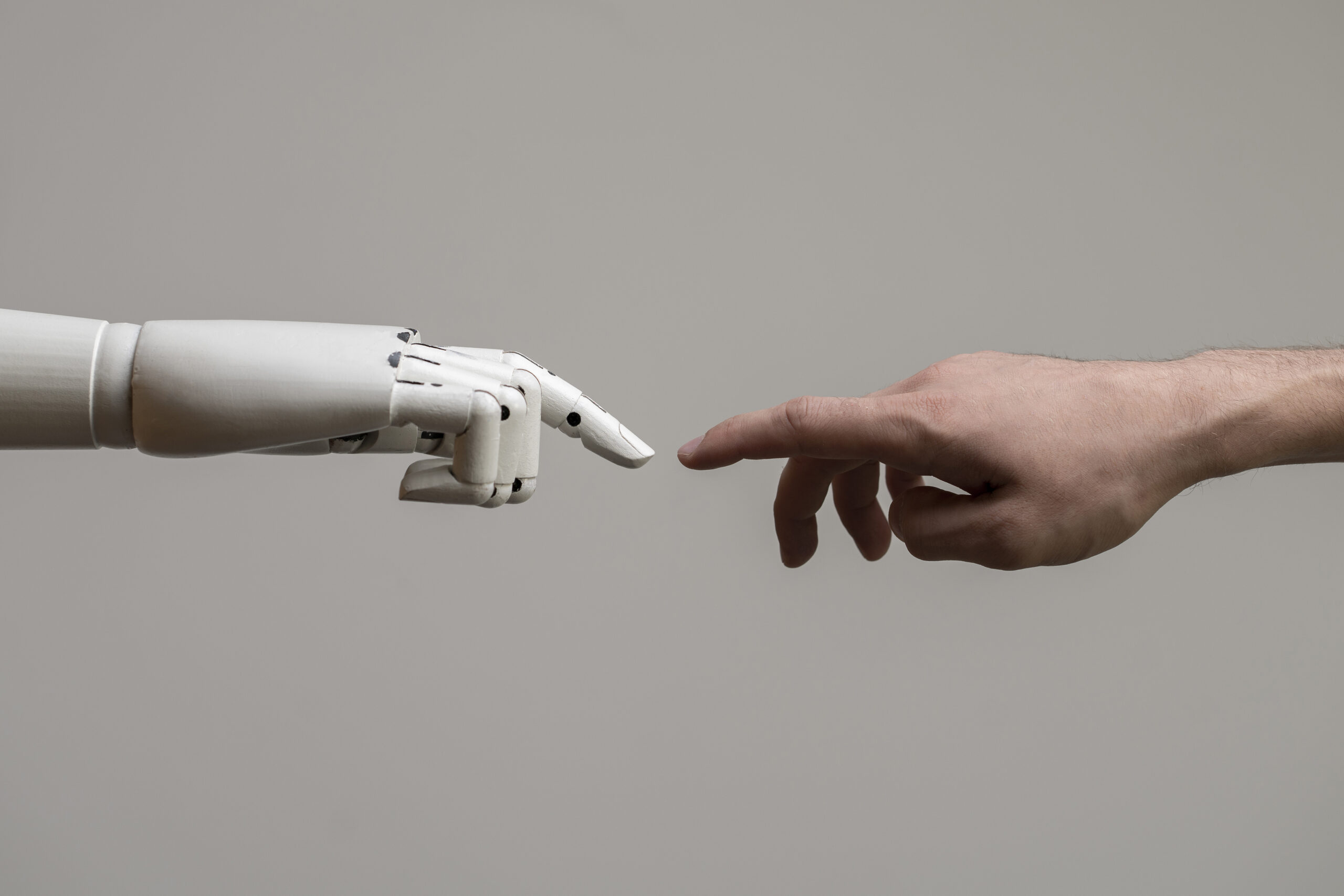
Two in the morning, anxiety spiking, no therapist awake to call. Type it into a chatbot instead. That’s not a hypothetical anymore; it’s just what a lot of people are already doing, quietly, without necessarily telling anyone, including their actual therapist.
It’s not hard to see the appeal. Free, or close to it. Always on. No waitlist, no copay, no waiting three weeks for a slot that finally opens up. Somewhere between “this is genuinely useful” and “this can do what a therapist does,” though, a lot of the online conversation gets sloppy, and the two claims get treated as basically the same thing. They’re not.
Here’s where this actually lands, upfront, so there’s no confusion later. AI can support mental health in real, practical ways. It cannot replace a human being sitting across from someone, reading what a face does when the words say one thing and the body says another. Those two things aren’t in tension. They’re just both true at the same time.
What AI Actually Does Well in Mental Health Support
Credit where it’s due first, because pretending these tools are useless would be dishonest. A few things stand out. Availability, for one. An app doesn’t sleep, doesn’t run a waitlist, doesn’t require insurance approval before it responds. For someone spiralling at midnight with nobody to call, that matters more than any theory about therapeutic depth ever could in that specific moment.
Structure is another strength. A lot of AI-based tools walk people through cognitive-behavioural therapy exercises, thought records, breathing techniques, mood tracking, and do it consistently, without getting tired or distracted the way a person eventually does. That consistency has real value. A nudge to notice a spiral before it fully takes hold can make a genuine difference, and an app never runs out of patience for repeating it.
And for some people, typing into a screen just feels safer than saying something out loud to another person, at least at first. Lower the stakes enough,gh and people say things they’d otherwise sit on for months. That’s a legitimate, meaningful use, not a consolation prize.
Where Artificial Intelligence in Mental Health Hits a Wall
Here’s the part that gets glossed over in most of the breathless AI coverage. A language model doesn’t understand anyone. It predicts what a helpful response probably looks like, based on patterns in text it’s seen before. That’s a fundamentally different thing from a clinician sitting with someone’s actual history, their specific nervous system, the way a voice cracks on one particular word and not another.
Emotional attunement isn’t something that fully scripts into a system, no matter how sophisticated the model gets. When a client goes quiet mid-sentence in a real session, a therapist isn’t just processing the words. There’s the pause to read, the shift in posture, the sudden break in eye contact right when the conversation edges toward something real. None of that reaches a text box. An AI tool responding to “I’m fine” has no way of knowing that “fine” was said through gritted teeth.
Then there’s the risk piece, and this is the part that actually should give people pause. Mental health work sometimes means catching something serious before a person has even named it themselves, minimising suicidal thoughts, a pattern that’s clearly heading somewhere dangerous but hasn’t been said out loud yet. That kind of judgment call draws on years of clinical training and, honestly, a fair amount of instinct built from sitting with a lot of people over a lot of years. Handing that call to a system that’s ultimately pattern-matching, however good the pattern-matching has gotten, is a genuinely risky bet.
AI in Therapy vs. Online Therapy: Not the Same Thing
These two get lumped together constantly, and they shouldn’t be. Online therapy is still a real, licensed human therapist, just meeting a client through a screen instead of an office. The relationship, the training, the accountability, none of that changes. Only the delivery does.
AI in therapy usually means something else entirely, a chatbot or algorithm standing in for the human altogether, not just changing how someone accesses one. Online therapy has a solid track record at this point, built up over years of research and clinical use. AI-only tools are much newer, much less studied long-term, and mostly better suited as a supplement than as the whole treatment.
If accessibility is the real barrier, and for a lot of people it genuinely is, online therapy with an actual licensed professional is usually the stronger move. An AI tool works better as something used between sessions, filling small gaps, not something that quietly replaces having sessions at all.
The Role of Human Connection in Healing
Something gets lost in a lot of the AI-and-mental-health coverage: connection itself is often the mechanism of healing, not just the delivery method for a set of techniques. Feeling genuinely seen by another person, having someone hold space for something shameful and not flinch, does something a well-structured exercise on its own simply doesn’t touch.
A lot of what happens in a therapy room isn’t information transfer at all. It’s relational. It’s a client testing whether they can trust someone with something they’ve never said out loud before, and finding out they can. An algorithm can simulate warmth in its phrasing, sure. It can’t actually be moved by what someone tells it, and somewhere underneath the surface, most people can feel that difference, even without being able to name exactly why.
What I Have Observed as a Psychologist
I’ve had clients mention using AI chatbots between sessions, mostly to vent on a hard night or to organise their thoughts before we meet. Some of it’s been genuinely useful. One client showed up with a thought record she’d built with an app, and it gave us a clear starting point that saved the first fifteen minutes of a session we’d otherwise have spent just getting oriented.
But I’ve also seen the other side of it. A client who leaned on an AI tool heavily during a rough patch told me later that it kept validating her in ways that, looking back, weren’t actually helping her see the pattern she was stuck in. It agreed with her framing instead of gently pushing back, because agreement is often what these systems are optimised to produce. A good therapist doesn’t just agree. Sometimes the most useful thing said in a session is the thing a client didn’t want to hear.
What I tell clients now is fairly simple. Use the tools if they help between sessions, track a mood, get through a hard hour, journal something not ready to be said out loud yet. Just don’t mistake that for the work itself. The work still needs a person on the other side of it every time.
Final Thoughts
AI in therapy isn’t the villain some people make it out to be, and it isn’t the future replacement for therapists either. It’s a tool, a genuinely useful one for certain things, availability, structure, a low-stakes place to start putting words to something hard. What it can’t do is sit with someone in the actual mess of being human, read what isn’t being said, or build the kind of trust that makes real change possible in the first place.
If you’re weighing an app against actual support, or wondering whether either one is enough right now, that’s worth talking through with someone who can actually see you, not just process what you type.
Need a Safe Space to Make Sense of What You’re Going Through?
You don’t have to navigate difficult emotions, life transitions, or relationship challenges alone. If you’re looking for compassionate, evidence-based psychological support, connect with Tanu Choksi and take the first step toward greater clarity, resilience, and emotional well-being.
FAQs
Q: Can AI actually replace a human therapist?
A: No, not at this point, and not for the parts of therapy that depend on genuine emotional attunement, nonverbal cues, and clinical judgment. AI tools can support certain tasks between sessions, but the therapeutic relationship itself isn’t something an algorithm can replicate.
Q: Is it safe to use AI chatbots for mental health support?
A: For light, low-stakes use, journaling prompts, mood tracking, general coping structure, many people find it helpful. For anything involving crisis, suicidal thoughts, or serious mental health symptoms, a licensed professional needs to be involved, since AI tools aren’t equipped to make those judgment calls safely.
Q: What’s the difference between AI therapy and online therapy?
A: Online therapy connects someone with a real, licensed therapist through video or messaging; the relationship and training stay the same, only the format changes. AI in therapy typically refers to a chatbot or algorithm replacing the human altogether, which is a much newer and less proven approach.
Q: Can AI tools help alongside traditional therapy?
A: Often, yes. Many people use AI-based apps between sessions for things like tracking moods or practising CBT exercises, which can genuinely support the work happening in therapy. It works best as a supplement,t though, not a substitute for the sessions themselves.
Q: Why does human connection matter so much in mental health treatment?
A: A lot of healing happens through feeling genuinely seen and understood by another person, not just through techniques or exercises. That relational trust is part of what creates real change, and it’s something a simulated response, however well-phrased, can’t fully provide.