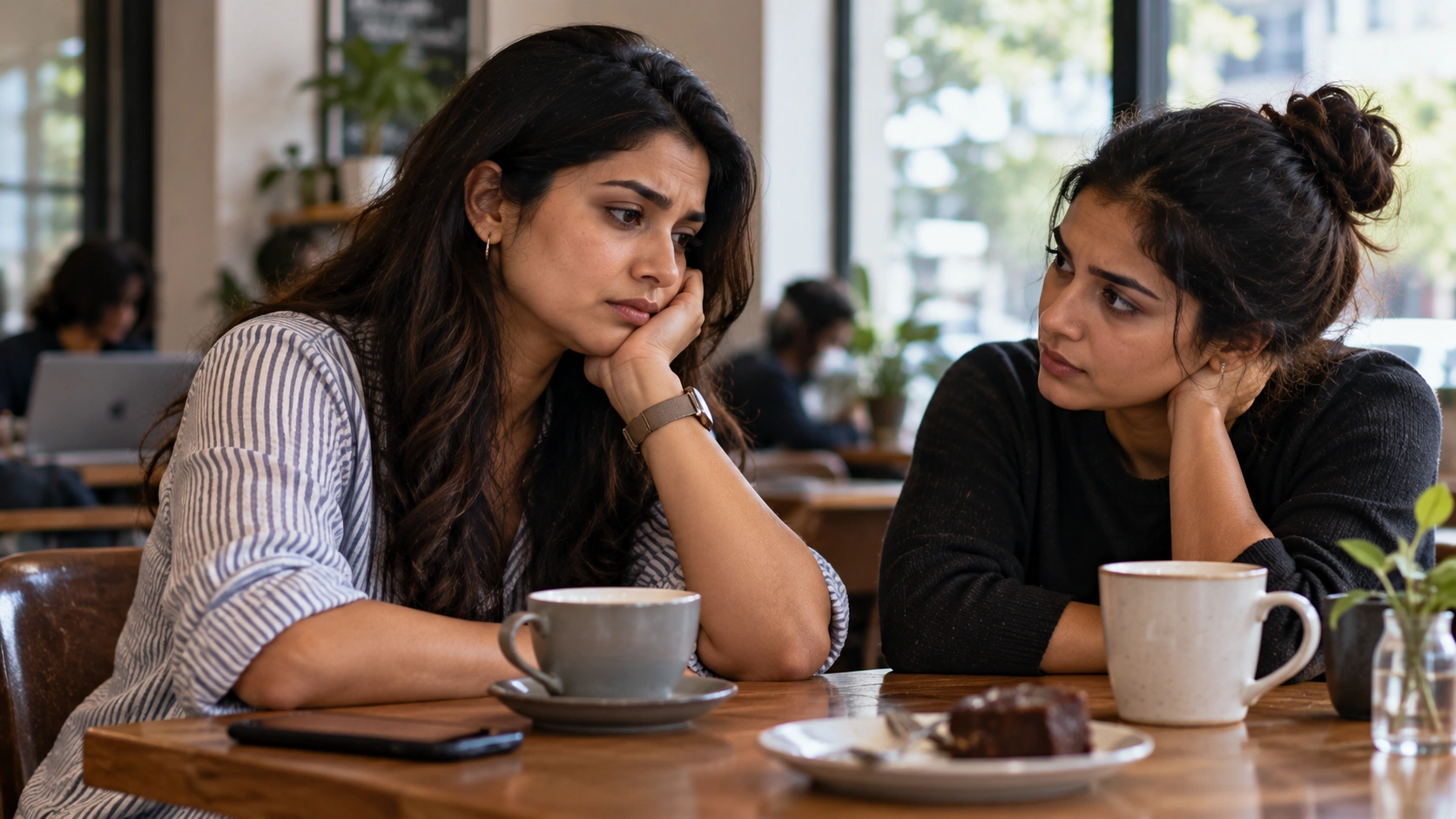
You may have once spoken to a friend every day. You knew what was happening in each other’s lives, shared plans, celebrated small wins, and turned to each other during difficult moments.
Now, conversations feel forced. You have different priorities, different interests, or simply less to say.
Nothing dramatic happened. There was no major argument or betrayal. Yet something feels different.
This can leave you wondering, “Did we grow apart?” or even, “Is there something wrong with me for not wanting this friendship anymore?”
Outgrowing friendships can be a normal part of growing and changing as a person. It can still bring sadness, guilt, confusion, or a sense of loss.
Why Do Friendships Change as We Get Older?
Friendships can change because people change. As you move through different stages of life, your priorities, responsibilities, values, interests, and emotional needs may also shift.
A friendship that once suited an earlier version of you may not feel as natural today.
For example, two people who were extremely close during college may develop very different lifestyles after entering their careers. One may prioritise work, while the other may focus on family, travel, personal growth, or a completely different social circle.
This does not necessarily mean that either person has done something wrong.
Sometimes, friendships evolve with you. At other times, you may gradually realise that the connection no longer feels mutually supportive or aligned with who you are becoming.
Why Can Outgrowing a Friendship Feel So Difficult?
Even when you recognise that a friendship has changed, accepting it emotionally can take time.
You May Miss the History
A friendship can represent years of shared memories, experiences, inside jokes, and important life moments.
Letting the relationship change may therefore feel like letting go of a part of your own past.
You May Feel Guilty
You may think:
“Am I being selfish?”
“Should I try harder?”
“After everything we have been through, can I really walk away?”
Guilt can make it difficult to distinguish between caring about someone and feeling obligated to maintain the same level of closeness.
You May Confuse Change With Failure
Some people assume that if a friendship changes, someone must be responsible.
But not every relationship is meant to remain exactly the same throughout life.
A friendship can have been meaningful and genuine even if it no longer fits your present life.
Your Emotional Needs May Have Changed
As you grow older, you may become clearer about the qualities you value in relationships, such as emotional safety, honesty, reciprocity, shared values, or mutual respect.
Realising that an old friendship does not provide some of these things can be uncomfortable.
What Makes Outgrowing Friendships Harder?
Certain reactions can make the transition more emotionally complicated.
Holding On Only Because of History
Shared history matters, but it does not automatically mean that a relationship must remain unchanged forever.
Avoiding Honest Reflection
You may keep telling yourself that everything is fine because acknowledging the change feels painful.
Comparing the Friendship With the Past
Constantly thinking, “We used to be so close,” can make the present relationship feel like a problem that needs to be fixed rather than something that has naturally evolved.
Suddenly Cutting Someone Off Without Understanding Your Feelings
There are situations where creating distance is appropriate. However, making major relationship decisions purely from temporary frustration may leave you with unresolved feelings later.
It can help to first understand whether you are genuinely outgrowing the friendship or simply going through a temporary period of stress or disconnection.
How Can You Cope With Outgrowing a Friendship?
You do not always need to force a friendship back into its old form. Instead, consider what the relationship can realistically look like now.
Accept That Relationships Can Change
Try replacing “We are not friends anymore” with “Our friendship has changed.”
This small shift can help you acknowledge the change without immediately turning it into a complete loss.
Ask What You Actually Miss
Do you miss the person as they are today, or do you miss who you both were when the friendship was closer?
This distinction can help you understand what you are grieving.
Consider Whether the Friendship Can Evolve
Not every friendship needs daily conversations to remain meaningful.
Perhaps the relationship could become an occasional catch-up, a shared-interest friendship, or a connection that becomes closer during certain phases of life.
Communicate When Necessary
If something specific has changed, an honest conversation may help.
You do not need to assign blame. You can simply talk about how the relationship feels different and what you would like from the friendship going forward.
Make Space for New Connections
Outgrowing one friendship does not mean you have to become socially isolated.
As your interests and values evolve, you may naturally connect with people who fit your current stage of life.
When Does This Become a Bigger Concern?
Changing friendships are not automatically a sign of a psychological problem.
However, it may be worth paying closer attention if you repeatedly withdraw from people, feel intense fear around closeness, experience persistent loneliness, or believe that you cannot trust or connect with anyone.
Similarly, if every change in a friendship triggers overwhelming guilt, anxiety, anger, or emotional distress, exploring the underlying pattern may be useful.
The goal is not to label the experience. It is to understand what you are experiencing and whether it is affecting your wellbeing or relationships.
When Can Individual Therapy or Online Therapy Help?
You may consider individual therapy if changing friendships brings up recurring patterns of self-doubt, guilt, rejection sensitivity, loneliness, or difficulty setting boundaries.
Therapy can provide a space to understand your emotional responses and reflect on what you want from relationships without being told what decision you should make.
For people who prefer remote sessions because of schedule, distance, privacy, or convenience, online therapy can also provide an accessible way to explore these concerns with a mental health professional.
Therapy does not have to be about deciding whether to keep or end a friendship. It can also help you understand yourself better within your relationships.
What I Observe as a Psychologist
As a psychologist, I find it important to recognise that relationships are not static.
People grow, priorities change, and emotional needs can become clearer with time. Sometimes, the healthiest response is not to force a relationship to remain exactly as it was.
I encourage people to look at the quality of a connection in the present rather than judging it only by its history.
It is also worth asking whether you are creating distance because the relationship genuinely no longer fits, or because closeness itself feels uncomfortable.
That distinction can help you respond with greater awareness rather than guilt or impulse.
Tanu Choksi (Psychologist)
What Can You Practise?
Try these simple reflections:
- Name the change: Write down what feels different about the friendship today.
- Separate guilt from responsibility: Ask whether you are actually responsible for maintaining the relationship exactly as it was.
- Look at the present: Consider how you feel after interacting with the person now, not only how you felt years ago.
- Identify your needs: Write three qualities you currently value in close friendships.
- Allow some flexibility: Consider whether the friendship can continue in a different form.
- Stay connected: If you are creating distance from one person, make an effort to maintain or build other meaningful connections.
Key Takeaways
- Friendships can naturally change as people grow older.
- Outgrowing friendships does not necessarily mean that anyone has done something wrong.
- Shared history can make changing relationships emotionally difficult.
- Guilt does not always mean that you are making the wrong choice.
- Some friendships can evolve rather than completely end.
- Persistent loneliness, withdrawal, anxiety, or relationship distress may deserve further attention.
- Individual therapy can help you understand recurring emotional and relationship patterns.
- Online therapy can be an option for people who prefer remote psychological support.
Growing Apart Does Not Erase What You Shared
Not every friendship is meant to remain the same for every stage of your life.
Sometimes, people grow together. Sometimes, they grow in different directions. And sometimes, a friendship simply becomes quieter without becoming meaningless.
You can appreciate what a friendship gave you without forcing yourself to recreate the past.
If you are struggling with guilt, loneliness, changing relationships, or uncertainty about your emotional patterns, speaking with a psychologist can provide a space for thoughtful reflection. Tanu Choksi offers individual psychological support, including online therapy, for people who want to better understand themselves and their relationships.
Frequently Asked Questions
Q1. Is outgrowing friendships normal?
A. Yes. As people grow older, their priorities, values, interests, responsibilities, and emotional needs can change. Friendships may naturally change along with them.
Q2. How do I know if I am outgrowing a friendship?
A. You may notice that your interests, values, communication patterns, or emotional needs no longer align in the same way. However, temporary distance or stress can also affect friendships, so it is useful to look at the pattern over time.
Q3. Should I end a friendship if we have grown apart?
A. Not necessarily. Some friendships can become less frequent or take a different form. Whether you maintain, redefine, or end a friendship depends on the quality of the current relationship and what feels appropriate for both people.
Q4. Why do I feel guilty about outgrowing a friend?
A. Guilt can come from shared history, expectations, fear of hurting someone, or the belief that changing relationships means you have failed someone. Reflecting on what you are actually responsible for can help.
Q5. Can therapy help with changing friendships?
A. Yes. Individual therapy can provide space to explore loneliness, guilt, boundaries, relationship patterns, or difficulty coping with change. Online therapy can also be considered if remote sessions are more suitable for you.