
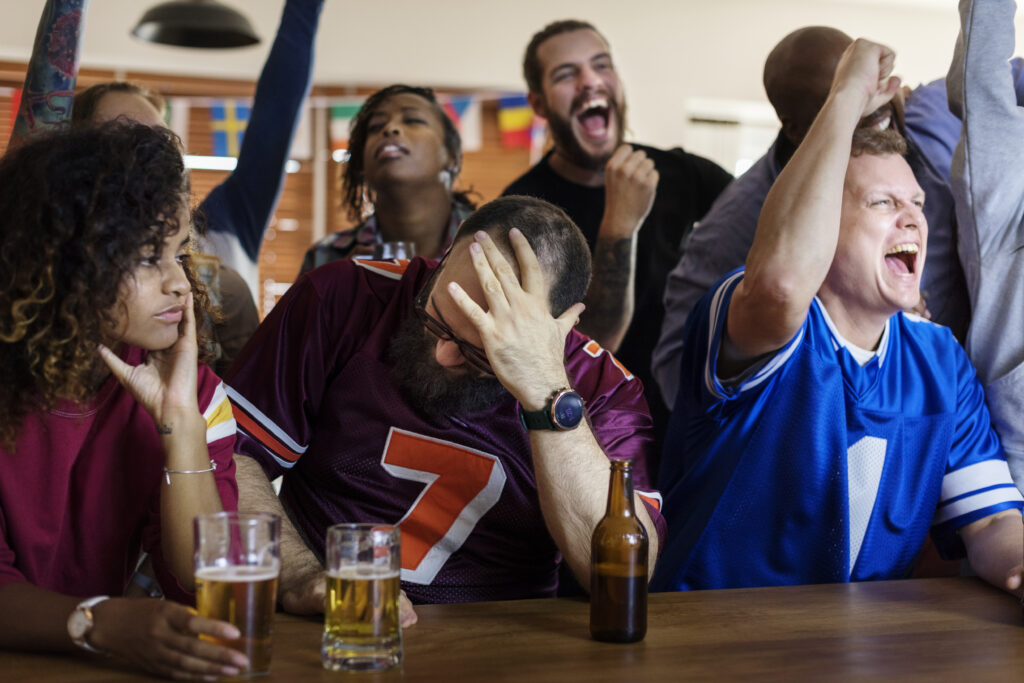
A missed penalty in the eighty-ninth minute, and a grown adult who hasn’t cried in years is suddenly wiping their eyes on the couch. A last-second three-pointer goes in, and a room full of strangers is hugging like family. Nobody planned any of that. It just happens, every single time, to people who logically know it’s just a game.
That gap, between “it’s just a game” and the way it actually feels in the body, is where this gets interesting. The heart rate spike during a penalty shootout is real. The stomach drop after a bad call is real. None of it is performance.
This piece looks at what’s actually going on underneath the psychology of sports fans, what sports psychology has figured out about why fandom hits this hard, and where emotional regulation therapy fits into a Sunday that went sideways because of a scoreline.
Why a Game Can Feel Personal
The brain doesn’t fully separate “my team” from “me.” Once someone identifies as a fan, the team’s performance gets processed a little like a personal performance. A win activates something close to personal pride. A loss can trigger something close to personal failure, even though the fan never touched the ball.
This is called BIRGing and CORFing in the research, basking in reflected glory and cutting off reflected failure, and it explains a lot of fan behaviour that looks irrational from the outside. Wearing the jersey after a win. Avoiding it after a loss. Saying “we won” but “they lost.”
None of that is fake. It’s identity fusion doing exactly what it’s built to do.
The Body Doesn’t Know It’s Optional
Watching a close game raises cortisol and heart rate in ways that mirror actual physical stress. Studies on fans watching high-stakes matches have recorded heart rates climbing into ranges usually seen during moderate exercise, sitting perfectly still on a couch.
The nervous system doesn’t distinguish “threat to my safety” from “threat to my team’s win probability” very well. It just responds. That’s why a two-hour match can leave someone genuinely drained, not because they did anything physical, but because their body ran a low-grade stress response for two hours straight.
Losses hit harder than wins feel good, too. Loss aversion, a well-documented bias, means the emotional low of a defeat tends to outweigh the emotional high of an equivalent win. This is part of why a single bad loss can ruin an entire evening even after a season full of wins.
Why Losing Sometimes Feels Like Grief
Fans describe real grief after major losses. Trouble sleeping. Low mood the next day. Irritability that has nothing to do with the actual stakes of the game. That reaction makes more sense once you factor in how much identity, routine, and social connection often get wrapped into being a fan of something.
A team isn’t just entertainment for a lot of people. It’s a weekly ritual, a shared language with friends and family, sometimes a connection to a parent who’s no longer around to watch the game with them. Losing the game can, in a small way, touch all of that at once.
(internal link opportunity: “Understanding Grief That Doesn’t Look Like Grief”)
This doesn’t mean every bad loss needs a therapy session. Most fans bounce back within a day. But for some, the mood dip lingers longer than the loss itself warrants, and that gap is worth paying attention to.
What Sports Psychology Says About the Upside
It’s not all stress and grief. Fandom also delivers something researchers call collective effervescence, the specific high that comes from feeling emotion in sync with a crowd of strangers. That’s part of why watching a game alone rarely hits the same as watching it in a packed stadium or a loud bar.
Sports also offer something rare in adult life: low-stakes emotional expression that’s socially acceptable. Crying at a wedding gets side-eyes from some crowds. Screaming at a television during a match doesn’t. For a lot of people, sport is one of the only places they’re allowed to feel something loudly and openly, without needing to explain themselves.
There’s also a genuine mental health upside tied to belonging. Fan communities, in-person or online, give people a built-in social group with shared rituals and a shared emotional calendar. That’s protective against isolation, even when the team is terrible.
When Fandom Crosses Into Something Worth Addressing
Most fans experience the full range, the highs, the crashes, the irrational superstitions, without it costing them much. But there’s a point where it tips over. Skipping work because of a loss. Snapping at family over a referee decision. A mood that stays wrecked for days, not hours.
That’s usually less about the sport itself and more about what the sport has become a container for. Stress from somewhere else, funnelled into something easier to yell about. A game permits one to feel big feelings about something that, deep down, feels lower-stakes than whatever’s actually going on.
Emotional regulation therapy doesn’t ask anyone to care less about their team. It works on the gap between the feeling and the reaction, so the loss can still sting without taking the rest of the week down with it.
What I Have Observed as a Psychotherapist
I’ve had more than a few clients bring up a bad loss almost sheepishly, like it’s a strange thing to be upset about. It rarely is, once we look closer. Usually, the game is standing in for something else: a hard week at work, a strained relationship, grief that hasn’t had anywhere else to go. The final score just gave it an outlet.
What I find most useful in session isn’t telling someone to care less about sports. It’s helping them notice the size of the reaction compared to the size of the actual event. A rough Monday after a loss is normal. A rough week says the loss picked up weight from somewhere else, and that’s usually the more interesting thread to pull.
I’ve also seen fandom work as a genuine protective factor, not just a stressor. Clients who’ve lost a parent often describe the team as one of the last living threads to that person, and watching the game becomes a way of staying connected to them. That’s not something to regulate away. That’s something worth naming and holding onto, carefully.
Final Thoughts
Getting emotional over a game isn’t a character flaw or something to be embarrassed about. It’s the brain doing exactly what it evolved to do with identity, belonging, and shared experience. The intensity is the feature, not the bug.
The goal isn’t to feel less. It’s to notice when a Tuesday-morning mood is really about Sunday’s scoreline, and to give that reaction a little room without letting it run the whole week.
Need a Safe Space to Make Sense of What You’re Going Through?
You don’t have to navigate difficult emotions, life transitions, or relationship challenges alone. If you’re looking for compassionate, evidence-based psychological support, connect with Tanu Choksi and take the first step toward greater clarity, resilience, and emotional well-being.
FAQs
Q1. Why do people become emotionally attached to sports teams?
A: You become part of the identity of a team when you root for them. Wins and losses are personal because fans develop strong emotional ties over time.
Q2. Why does losing a game sometimes feel personally upsetting?
A. Losses can be emotional because fans invest time, hope, and identity in their team. It could also trigger other latent stress or disappointment.
Q3. Can watching sports improve mental health and emotional well-being?
A: Sure. Watching sports can be a source of joy, help reduce feelings of loneliness, create stronger social bonds, and provide a healthy outlet for emotions when done in moderation.
Q4. Why do sports create such a strong sense of community and belonging?
A: The same team cheers people together by common experiences, traditions, and emotions, helping to establish meaningful social relationships.
Q5. How can fans manage intense emotions after major sporting events?
A: Recognise your emotions, take a break if you need to, focus on something else, and remember your well-being does not depend on the outcome of a game. If you have strong reactions frequently or they interfere with daily life, consult a mental health professional.